
New: find your coffee type in 2 minutes. Take the free quiz →
The at-home experience

Your setup, your coffee, your best cup.

Most people start with a machine, then look for beans, then learn to make them taste great. This page walks you through all three. Jump in wherever you are.

1
Step 1 · Find your setup

Start with your mornings, not the machine.

The best setup is the one that fits how you actually live. Pick the morning that sounds most like yours, and we'll show you the setups that fit it, honestly: the time, the cleanup, the real cost, and who ends up regretting it.

Already have a machine you like? Skip to step 2

Pick a morning above to see the setups that fit it.

The Push-Button Espresso

Bean-to-cup espresso machine (grinds, brews and often steams milk for you)

Time per cup
About 1 minute
Daily cleanup
About 2 minutes, plus a weekly deeper clean
Learning curve
Very low
Total cost
$500 to $1,500+ (grinder built in)

You'll love it if

  • You want lattes or espresso fast
  • Several people want different drinks
  • You'd rather not fuss

You'll regret it if

  • You want to tinker with every shot
  • You tend to skip cleaning (milk parts need a daily rinse)
  • Your counter is tight
Grinder, extras and example models

Your grinder: Built in, so you don't need a separate one. Very oily, dark beans can clog some machines, so check the manual.

Extras you'll need: Very little. Descaling solution and cleaning tablets, and filtered water if your tap is hard.

Example models to start from
  • De'Longhi Magnifica Evo$500 to $900
  • Philips 3300 Series LatteGo$600 to $900
  • KitchenAid Fully Automatic Espresso Machine KF7$1,450 to $1,700
  • Jura E8$1,500 and up

The All-in-One Espresso

Espresso machine with a built-in grinder and a steam wand

Time per cup
3 to 5 minutes
Daily cleanup
2 to 3 minutes
Learning curve
Medium: a week or two to get it right
Total cost
$500 to $1,000 (grinder built in)

You'll love it if

  • You want real espresso and milk drinks without buying two machines
  • A few minutes of routine sounds nice
  • You like learning a little

You'll regret it if

  • Your mornings are a sprint
  • Knocking out grounds and wiping a steam wand every day sounds like a chore
  • You know you will want a better grinder later (this one is built in)
Grinder, extras and example models

Your grinder: Built in, and it grinds fine enough for espresso. If you get serious later, a separate espresso grinder is the usual next step.

Extras you'll need: Many come with a tamper and milk pitcher. Add a small scale and a knock box. Best upgrade: a bottomless portafilter.

Example models to start from
  • Breville Barista Express$600 to $750
  • De'Longhi La Specialista Arte$550 to $750
  • KitchenAid Semi-Automatic Espresso Machine with Burr Grinder$500 to $800
  • Ninja Luxe CafĂ© Premier (also brews drip and cold brew)$500 to $600
  • Breville Barista Touch$750 to $1,000

The Starter Espresso Pair

Compact espresso machine plus a separate grinder

Time per cup
3 to 5 minutes
Daily cleanup
2 to 3 minutes
Learning curve
Medium
Total cost
$420 to $700 with the grinder

You'll love it if

  • You want real espresso on a smaller counter or budget
  • You're happy to learn as you go
  • You might upgrade one piece at a time

You'll regret it if

  • You only budget for the machine and skip the grinder
  • You expect push-button results on day one
Grinder, extras and example models

Your grinder: You need a grinder with settings that go fine enough for espresso. Not every grinder can, so check before you buy. It matters as much as the machine.
Conical or flat? Conical is the usual choice at this price, and it is forgiving with milk drinks. Go flat if you mostly drink straight espresso from lighter roasts and can spend more.

Extras you'll need: A small scale, a tamper (the included one is often basic), a milk pitcher and a knock box. Best upgrade: a bottomless portafilter.

Example models to start from
  • Breville Bambino Plus$400 to $500
  • De'Longhi Dedica Arte$250 to $350
  • Baratza Encore ESP (grinder)$170 to $200

The Craft Espresso Setup

Manual espresso machine plus a quality grinder

Time per cup
5 to 10 minutes
Daily cleanup
3 to 5 minutes
Learning curve
High, and that is the fun
Total cost
About $1,000 to $1,800 to start, with the grinder. Step-up and dream machines run about $2,000 to $10,000+

You'll love it if

  • The process is the point
  • Your mornings are slow, or weekends are your coffee time
  • You enjoy weighing, timing and adjusting

You'll regret it if

  • You need coffee in five minutes
  • Several people want drinks at once
  • You'd rather not measure anything
Grinder, extras and example models

Your grinder: The grinder matters as much as the machine. Look for very small adjustment steps, and plan to spend about as much on it as on the machine.
Conical or flat? Either works at this level. Flat tends to bring clarity to straight shots and light roasts; conical tends to bring body and sweetness, especially with milk.

Extras you'll need: A scale with a timer, a good tamper, a milk pitcher, a knock box and a distribution tool. Best upgrade: a bottomless portafilter.

Example models to start from
  • Getting started
  • Gaggia Classic Evo Pro$450 to $550
  • Rancilio Silvia$900 to $1,100
  • Fellow Espresso Series 1$1,200 to $1,600
  • Eureka Mignon Specialita (grinder)$450 to $650
  • Step up
  • Lelit Mara X$1,700 to $2,000
  • Rocket Espresso AppartamentoAbout $2,050
  • Lelit BiancaAbout $3,000
  • Dream machine
  • La Marzocco Linea MicraAbout $4,500 to $5,000
  • La Marzocco Linea Mini$5,900 to $7,500
  • Slayer Espresso Single GroupAbout $9,000 and up

The Hand-Powered Espresso

Manual lever espresso maker: you heat the water and press the shot by hand

Time per cup
5 to 10 minutes
Daily cleanup
2 to 3 minutes
Learning curve
High, and fully hands-on
Total cost
About $300 to $1,000 with an espresso grinder

You'll love it if

  • You drink straight espresso or americanos
  • You love the process and slow mornings
  • Your counter or budget is small
  • You want real espresso when you travel

You'll regret it if

  • You mostly drink lattes (there is no steam wand, so you need a separate milk frother)
  • You need coffee in a few minutes
  • Several people want drinks at once
Grinder, extras and example models

Your grinder: You need a grinder that goes very fine, in small steps. A quality hand grinder is a common match: quiet, compact, and it travels with the brewer.
Conical or flat? Either works. Most hand grinders made for espresso are conical, which keeps the setup compact and affordable.

Extras you'll need: A kettle, a scale with a timer, and a separate milk frother if you want milk drinks.

Example models to start from
  • Flair Neo FlexAbout $120 to $150
  • Flair PRO 3About $350 to $400
  • Cafelat RobotAbout $350 to $400
  • Flair 58About $600 to $700
  • 1Zpresso J-Ultra (hand grinder)About $200

The Reliable Drip

Quality automatic drip coffee maker

Time per cup
1 minute hands-on, about 5 to brew
Daily cleanup
About 1 minute
Learning curve
Low
Total cost
$230 to $500 with a grinder

You'll love it if

  • You drink black coffee, more than one cup
  • You want it ready when you wake up (many have timers)
  • The whole house drinks the same thing

You'll regret it if

  • You mostly want lattes or espresso
  • You like to play with each cup
Grinder, extras and example models

Your grinder: A grinder with settings, set to medium. Fresh grounds make the biggest difference in drip. Pre-ground works in a pinch, but it goes stale within days.
Conical or flat? Conical is plenty for drip.

Extras you'll need: Nothing beyond paper filters. A scale helps you repeat a pot you love.

Example models to start from
  • Ninja Fresh Brew 14-Cup Programmable Coffee Maker$80 to $120
  • OXO Brew 8-Cup Coffee Maker$200 to $230
  • Breville Precision Brewer$300 to $350
  • Fellow Aiden Precision Coffee Maker$320 to $365
  • Technivorm Moccamaster KBGV Select$330 to $360

The Pour-Over Ritual

Pour-over dripper, gooseneck kettle and grinder

Time per cup
4 to 6 minutes
Daily cleanup
About 1 minute
Learning curve
Medium
Total cost
$300 to $650 with a grinder and kettle

You'll love it if

  • You make one or two cups
  • A calm few minutes at the kettle sounds good
  • You enjoy tasting the difference between coffees

You'll regret it if

  • You need coffee for a crowd, fast
  • You don't want to stand at the kettle for four minutes
Grinder, extras and example models

Your grinder: A grinder with settings and a good medium-fine setting. Most of your budget should go here; the dripper itself is inexpensive.
Conical or flat? Flat if you love bright, light roasts and want them to shine. Conical if you prefer fuller, rounder cups or a smaller budget.

Extras you'll need: A gooseneck kettle, a scale with a timer and paper filters.

Example models to start from
  • Hario V60 dripper$10 to $30
  • Chemex 6-cup$45 to $55
  • Fellow Stagg EKG electric kettle$165 to $200
  • Fellow Ode Gen 2 (flat burr grinder)About $400
  • Fellow Opus (conical burr grinder)About $200

The Easy Immersion

French press, AeroPress or a similar steeping brewer

Time per cup
2 to 5 minutes
Daily cleanup
1 to 2 minutes
Learning curve
Low and forgiving
Total cost
$130 to $200 with a grinder

You'll love it if

  • Your budget or counter is small
  • You make one or two cups
  • You want something hard to get wrong

You'll regret it if

  • A little sediment at the bottom bothers you (French press)
  • You really want lattes or espresso
Grinder, extras and example models

Your grinder: A grinder with settings: coarse for French press, medium for AeroPress. Coffee from a spinning-blade grinder leaves more sludge in a French press.
Conical or flat? Conical is plenty. A hand grinder is a great low-cost match if you make one cup at a time.

Extras you'll need: A kettle, and a scale if you want to repeat a cup exactly.

Example models to start from
  • AeroPress Original$40 to $50
  • Bodum Chambord French Press$30 to $50
  • Clever Coffee Dripper$25 to $30

We don't sell machines, and no machine maker pays us to appear here. Example models are starting points, not endorsements. Times, costs and prices are approximate and change often.

The grinder

Grinders, in plain words.

The grinder shapes your cup as much as the machine. Here is how to tell the kinds apart, and how to choose.

Spinning blade

Looks like a small spice grinder: you press the lid and a blade spins.

It chops beans into a mix of dust and chunks, which brew unevenly and can taste bitter and sour at once. Fine in a pinch, and the first thing worth upgrading.

Conical burr

A cone-shaped burr turns inside a ring, crushing beans to a set size.

Tends to give a fuller, rounder, sweeter cup and is forgiving to dial in. Usually quieter and more affordable. A great match for medium and darker roasts, milk drinks, drip and French press.

Well-known examples

  • Baratza EncoreDrip, pour-over, French pressBudget
  • Baratza Encore ESPEspresso and dripBudget
  • Breville Smart Grinder ProEspresso and dripBudget
  • Fellow OpusEspresso, drip, pour-over, French pressBudget
  • Niche ZeroEspresso, pour-over, dripSplurge

Flat burr

Two flat, ridged rings face each other and grind between them.

Tends to make more even grounds, which brings out clarity and bright, distinct flavors. Usually costs more. A great match for light roasts, pour-over and straight espresso.

Well-known examples

  • Turin DF54Espresso, pour-over, dripBudget
  • Fellow Ode Gen 2Drip and pour-over (not espresso)Mid
  • Turin DF64 Gen 2Espresso, pour-over, dripMid
  • Baratza Vario+Espresso and pour-overSplurge
  • Eureka Mignon SpecialitaEspressoSplurge

Hand grinder

A small cylinder with a crank on top. Most use a conical burr inside.

Quiet, compact, no plug, and it travels. Expect a minute or so of cranking per cup, longer for espresso. Great for one or two cups; tiring for a household.

Well-known examples

  • Timemore Chestnut C3Pour-over, drip, French pressBudget
  • 1Zpresso J-UltraEspressoBudget
  • 1Zpresso K-UltraEspresso and pour-overMid
  • Comandante C40Pour-over, French pressMid

How to choose

  • Match it to how you brew. Espresso needs a grinder that goes very fine with small steps. Drip, pour-over and French press need medium to coarse. Not every grinder does both well.
  • Match it to your taste. Love bright, fruity coffees? A flat burr tends to show them off. Love rich, chocolatey cups or milk drinks? A conical burr tends to suit you. Not sure which you love? The coffee quiz in step 2 tells you.
  • Leave beans in it, or grind one dose at a time? A grinder with a bean container (hopper) is fastest for a busy house. A single-dose grinder, where you weigh out only what you brew, makes switching coffees easy.

Examples are well-known, widely reviewed grinders, not endorsements. Budget is under about $250, mid is about $250 to $450, splurge is about $450 and up. At entry prices, having any burr grinder matters more than conical or flat. The difference grows as you spend more, and your beans and taste matter as much as the burr shape.

Before you buy

What people forget before they buy.

The extras depend on your setup.

Each setup above lists what you will need beyond the machine and grinder, and many machines include some of it, so check the box first. For espresso, the single best upgrade is a bottomless portafilter: it shows exactly how your shot is pouring, so you can see what to fix.

Your water matters.

Hard water leaves mineral buildup, which means more descaling and can shorten the life of the machine. Filtered water helps the machine and the taste.

Repairs and warranty.

Espresso machines need occasional service. Check the warranty, and whether anyone near you repairs that brand.

The first weeks are practice.

Every new machine, and every new bag, takes some dialing in. Expect a few cups that miss while you learn. Start from your roaster's recipe, and see step 3 for the basics.

2
Step 2 · Free coffee quiz

Find the coffee that's actually yours.

Your taste changes with how you brew. The same coffee can taste completely different as espresso and as pour-over, so the free 2-minute quiz asks about your setup first. Then it matches you to your coffee type, plus the roasters and beans that fit it. Espresso, drip, pour-over, French press, AeroPress or moka pot: whatever you brew.

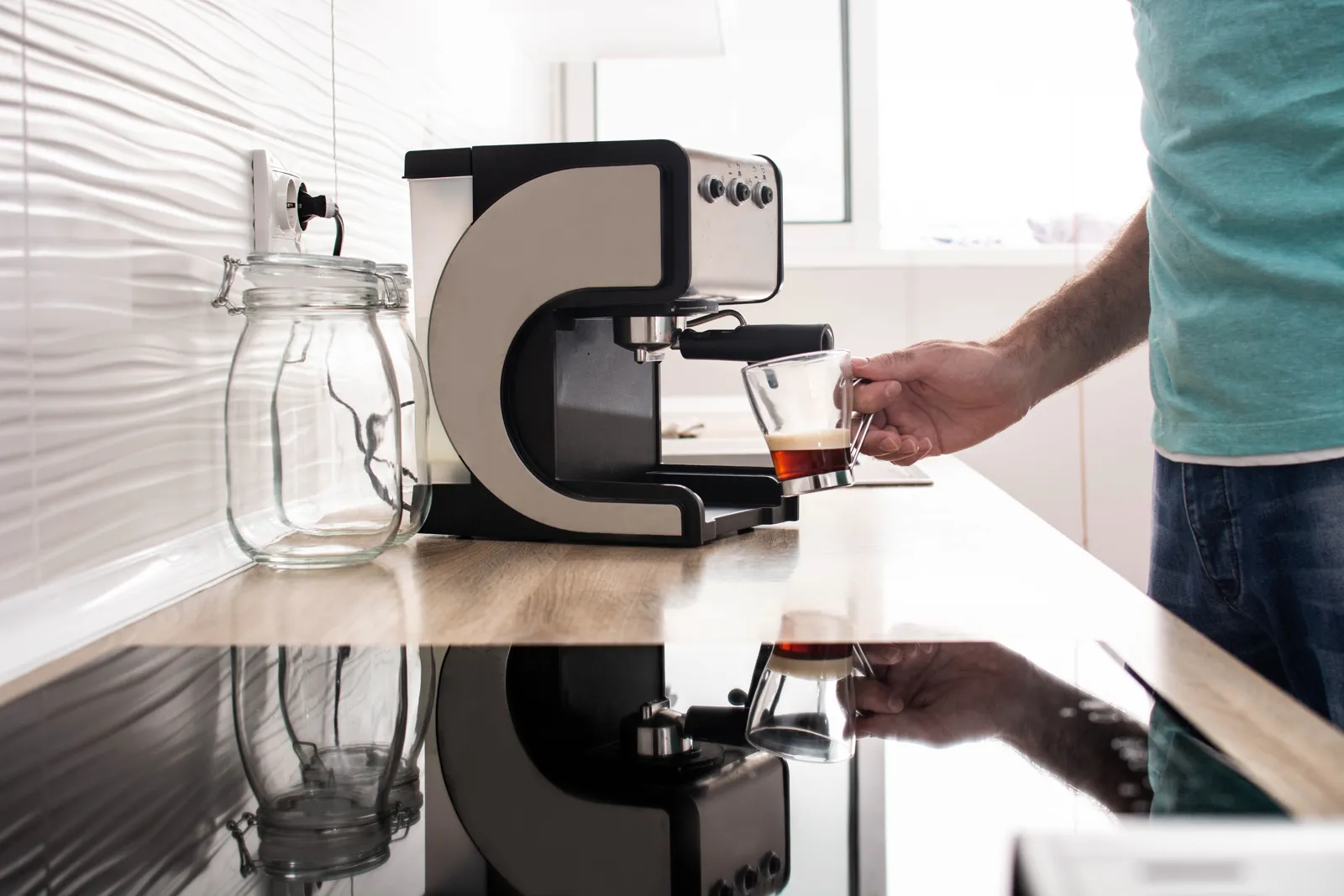
A man pulling an espresso shot into a glass cup at home

Built around your palate, not a trend.

Everyone lands in one of four. Which is yours? Your answers might surprise you.

Smooth OperatorA great cup with zero drama.
PuristYou came for intensity.
AdventurerIf it's interesting, you're pouring it.
ClassicistRight, every single time.

Your type, plus the roasters and beans that fit it, for the way you brew.

Get my coffee matches

Over 100 people have found their coffee type · Free · 2 minutes · no login to see your result

Before you buy the bag.

The honest truth

Grocery store beans have a freshness problem.

Many grocery store bags show only a "best by" date, which is often set many months after roasting, so you can't tell how long the coffee has been sitting. Coffee tastes its best after a short rest, in the weeks after roasting, then slowly goes flat.

  • Look for a "roasted on" date. No roast date usually means older coffee.
  • Skip pre-ground when you can. Ground coffee goes stale within days of opening.
  • Some grocery stores carry local roasters with roast dates on the bag. Those are worth looking for.
  • The freshest beans usually come straight from a roaster: their shop, their website or a subscription.

When to brew: the freshness window.

Fresher isn't always better. Right after roasting, beans give off gas, and brewed too soon they can taste sharp, sour or uneven. After a short rest they hit a sweet spot of a few weeks, then slowly go flat.

  • Filter: rest about 3 to 7 days. Best about 1 to 4 weeks after roasting.
  • Espresso: rest about 7 to 14 days. Best about 2 to 5 weeks after roasting.
  • Lighter roasts usually need a longer rest and stay good longer. Darker roasts are ready sooner and fade sooner.
  • Once you open the bag, aim to finish it within about 2 to 4 weeks.
  • Store beans airtight, away from heat, light and moisture. The fridge isn't a good home for beans you open every day.
  • Your roaster's advice wins. Many note when a coffee is best, or will tell you if you ask.

Typical ranges. They vary by roaster, roast level and coffee.

Buying beans

How to read a coffee bag

Tap a number on the bag.

  1. 1Roast date

    A "roasted on" date tells you exactly how old the coffee is, so you can use the freshness window above: a short rest first, then a sweet spot of a few weeks.

    A "best by" date alone tells you much less. Each brand sets its own, often many months after roasting. No date at all? Assume the coffee is older.

  2. 2Origin

    Origin is where the coffee grew: the country, often the region, sometimes the farm. Where it grew shapes the flavor, and coffees grown higher up tend to be brighter and more complex.

    Some general patterns:

    • Ethiopia: often floral and fruity, sometimes tea-like.
    • Kenya: often bright and juicy, with berry or citrus notes.
    • Colombia: often balanced and sweet.
    • Brazil: often nutty and chocolatey, with low acidity.
    • Sumatra: often earthy and heavy.

    Every farm, harvest and roaster varies, so treat these as starting points, not rules.

  3. 3Process

    Process is how the coffee fruit was removed from the bean, and it changes the flavor a lot:

    • Washed: the fruit is removed before the bean dries. Tends to taste clean, crisp and bright, letting the origin shine.
    • Natural: the whole fruit dries around the bean. Tends to taste fruitier, sweeter and heavier, sometimes jammy.
    • Honey: some of the sticky fruit stays on while it dries. Lands in between, often sweet with a rounder body. No honey is added.
    • Wet-hulled: common in Indonesia, and a big reason Sumatran coffee tastes earthy and heavy, with low acidity.
    • Anaerobic or experimental: fermented in sealed tanks for bold, unusual flavors. Fun to try, but not for everyone.

    Roasters match the roast to the process. Naturals, honeys and experimental coffees are usually roasted light to medium, because their fruit is the point. So the process on the label matters most on light and medium bags; on a dark roast, it makes much less difference.

  4. 4Single origin or blend

    • Single origin: from one country, region or even one farm. It tastes like that place, and it changes with each harvest, so a roaster's single origins come and go through the year.
    • Blend: coffees from different places combined for a steady, balanced taste that stays the same all year. Blends are often built for espresso and milk drinks.

    Neither is better. Love trying something new? Explore single origins. Want the same great cup every morning? A blend is a safe bet.

  5. 5Roast level

    • Light: keeps more of the coffee's own character. Brighter, fruitier, sometimes floral or tea-like, with more acidity.
    • Medium: balances that with more sweetness and body. Think caramel, chocolate and nuts.
    • Dark: tastes more of the roast itself. Bold, smoky and bitter-sweet, with less acidity and a heavier body. Darker beans often look oily.

    The darker the roast, the less you taste the coffee's origin and process. There's no industry standard, so one roaster's medium can be another's dark. And darker doesn't mean more caffeine; the difference is small.

  6. 6Espresso or filter

    • Espresso roasts are usually roasted a little darker or longer, so they're easier to dial in and stand up to milk.
    • Filter roasts are usually lighter, to stay bright and clear in drip and pour-over.
    • Omni roasts are roasted to work both ways.

    You can brew any coffee any way you like. The label just tells you how the roaster expects it to taste its best.

  7. 7Tasting notes

    These describe flavors the coffee reminds the roaster of, a bit like a wine label. They are not added flavorings, unless the bag says "flavored."

    "Acidity" means brightness, not sourness. It's the lively, juicy quality you taste in citrus, green apple or berries. Lighter roasts, washed coffees and high-grown coffees, like many from Kenya and Ethiopia, tend to have more of it. A cup with none can taste flat. Sour is different: it usually means the coffee was under-extracted (see step 3).

    Read the notes as a direction: "berry, citrus, floral" points bright and fruity; "chocolate, caramel, nutty" points rich and sweet. How much you taste them depends on freshness, your brew method and how well it's dialed in. A hint, not a promise.

Notes on a bag rarely tell you whether you will like it. That's what your coffee type is for.

3
Step 3 · Brew it well

Dialing in, in plain words.

"Dialing in" just means adjusting a few things until a coffee tastes the way you like on your setup. Every bag is a little different, so even experienced brewers do it with each new coffee. Here's the simple version.

1

Start from your roaster's recipe

Most roasters share a recipe on the bag or their site. It's made for that coffee, so it's the best place to start.

2

Taste it honestly

Is it sour, bitter, weak or too strong? You don't need fancy words. One of those is enough.

3

Change one thing

Make one small change, brew again and compare. Write down what you did, so a good cup is easy to repeat.

What does your cup taste like?

If it tastes...It usually means
Sour, sharp or thinGrind a little finer.
Bitter, harsh or dryingGrind a little coarser.
Weak or wateryUse a little more coffee.
Too strong or heavyUse a little less coffee.
Flat or staleThe beans may be past their best. Check the roast date against the freshness window.
Sharp and very bubblyThe beans may be too fresh. Give them a few more days to rest.

Which fix comes first, and how much to change, depends on the bag and your machine. Coffee Compass walks you through it in order.

Help with your exact bag

Brewing help, from your roaster.

This page covers the basics. For the coffee in your hands, our roaster partners offer Coffee Compass:

  • A starting recipe for that exact bag
  • Fixes in the right order for your machine
  • Advice that starts from your roaster's own recipe
  • Help again with every new bag

Look for a Coffee Compass QR code on their bags or counter. Don't see one? Ask them.

Ask my roaster
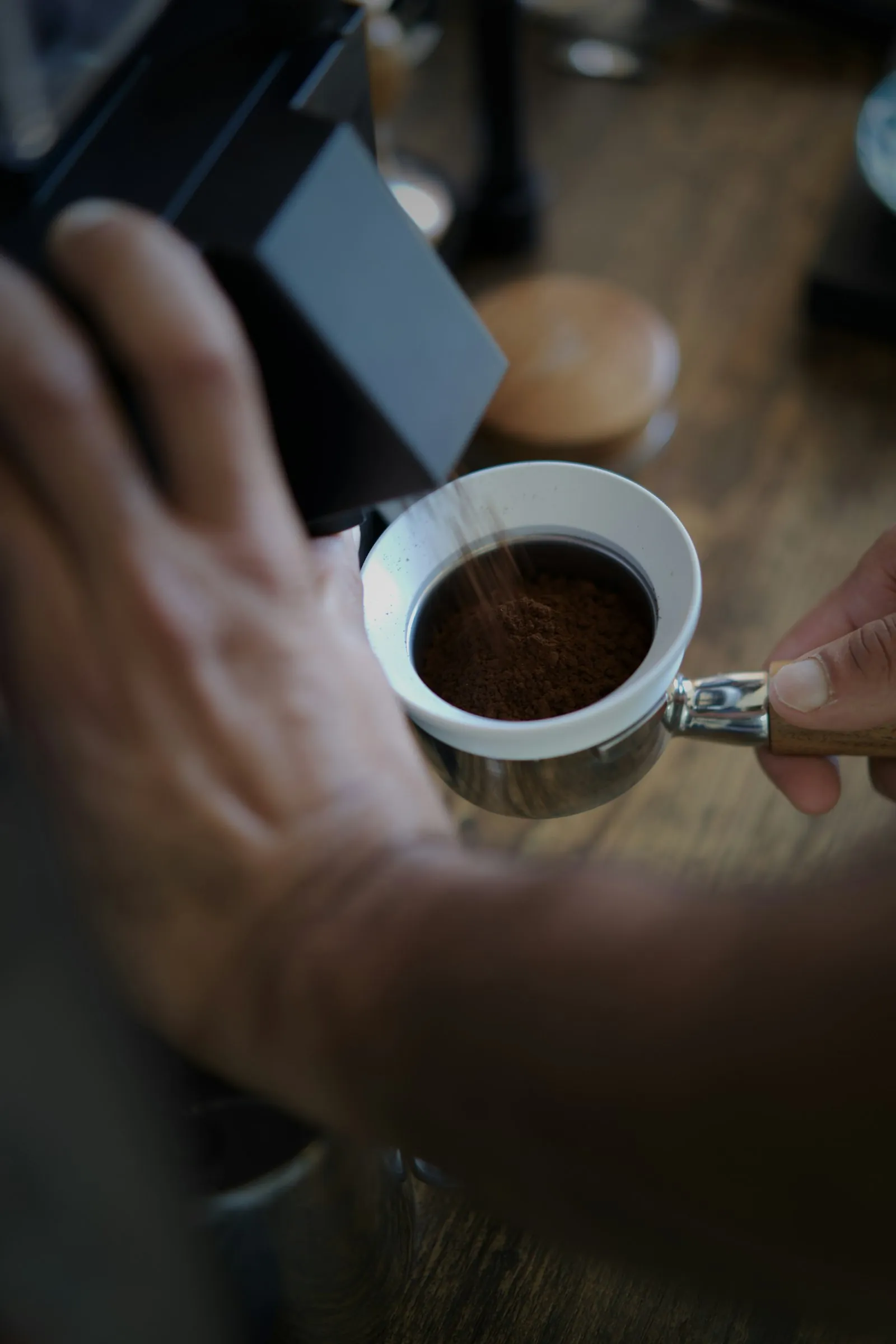
A portafilter filled with fresh coffee grounds
FAQ

Questions we hear a lot.

What is Cense?

Cense is the Coffee Translator. We help home coffee drinkers figure out what they actually like, and point them to roasters and beans that fit. We work with independent roasters, and we do not sell coffee.

Is the coffee quiz really free?

Yes. You don't need to log in to see your coffee type. The quiz asks for an email only to unlock your roaster and bean matches and send them to you.

What are the four coffee types?

Smooth Operator, Purist, Adventurer and Classicist. Your answers decide which one you are, and they might surprise you. Find yours.

Do roasters pay to be recommended?

Our recommendations follow your taste. We work with roasters and cafes, that's our business, but a partnership never changes what you see. If a bean fits, you'll see it. If it doesn't, you won't.

Are the machines you show sponsored?

No. We don't sell machines, and no machine maker pays us to appear on this page. Example models are starting points, not endorsements.

I use pods or capsules. Can you help?

Our coffee matches are for whole-bean coffee, so pods aren't something we can match today. If you're thinking about moving beyond pods, step 1 shows the setups that fit your mornings.

What do you do with my answers?

We use your coffee quiz answers to give you your result and matches. The setup cards and bag guide on this page don't save anything. We never sell your personal information. We may share combined, anonymous trends with coffee businesses, and no one can identify you from them. See our Privacy Policy for details.

I have a question that isn't here.

Your taste will keep changing.

Come back to the coffee quiz anytime, or check whether your setup still fits how you drink coffee.

Cense Coffee, a Mercavi LLC brand